
What Are Secondary Investments in Venture Capital What Are the Benefits


Secondary investments in venture capital refer to the purchase of existing stakes in private companies or funds from original investors, rather than investing directly in new startups. This approach allows investors to enter mature ventures with established track records, reducing some of the risks associated with early-stage investments. Secondary markets provide liquidity to early investors while offering newcomers access to high-potential opportunities. Benefits include shorter investment horizons, clearer valuation metrics, and the ability to diversify portfolios with proven assets. As the venture capital landscape evolves, secondary investments are becoming an increasingly attractive option for investors seeking both stability and growth in the private markets.
- What Are Secondary Investments in Venture Capital and What Are the Benefits?
- What are secondary investments in venture capital?
- What is the difference between primary and secondary investment in venture capital?
- How do secondary markets benefit investors?
- What is the objective of secondary investment?
- Frequently Asked Questions by our Community
What Are Secondary Investments in Venture Capital and What Are the Benefits?
Secondary investments in venture capital refer to the purchase of existing stakes in private companies or venture capital funds from current investors. These transactions allow investors to buy into companies or funds that are already established, rather than investing directly in new startups. The benefits of secondary investments include diversification, reduced risk, access to mature companies, and shorter investment horizons.
See Also What Are the Downsides of Being a Venture Capitalist?
1. Understanding Secondary Investments in Venture Capital
Secondary investments involve acquiring shares or interests in private companies or venture capital funds from existing investors. Unlike primary investments, where capital is directly injected into a startup, secondary investments focus on buying stakes that are already held by others. This type of investment is particularly attractive for investors looking to enter mature companies or funds without the uncertainty of early-stage ventures.
2. Key Benefits of Secondary Investments
Secondary investments offer several advantages, including reduced risk due to the maturity of the companies or funds involved. Investors can also benefit from shorter investment horizons, as secondary investments often involve companies closer to an exit event, such as an IPO or acquisition. Additionally, these investments provide diversification opportunities, allowing investors to spread their capital across multiple mature assets.
See Also How Do Venture Capitalists Make Money?
3. How Secondary Investments Reduce Risk
One of the primary benefits of secondary investments is the reduced risk compared to early-stage investments. Since secondary investments typically involve companies that have already demonstrated growth and stability, the likelihood of failure is lower. This makes secondary investments an attractive option for risk-averse investors who still want exposure to the venture capital space.
4. Access to Mature Companies Through Secondary Investments
Secondary investments provide investors with access to mature companies that have already gone through the initial stages of growth. These companies often have proven business models, established customer bases, and clear paths to profitability. By investing in these companies, investors can avoid the uncertainties associated with early-stage startups and focus on stable returns.
See Also Why Are Venture Capital Funds Mostly for Tech Startups?
5. Shorter Investment Horizons in Secondary Markets
Another significant benefit of secondary investments is the shorter investment horizon. Unlike primary investments, which may take years to mature, secondary investments often involve companies that are closer to an exit event. This allows investors to realize returns more quickly, making secondary investments an appealing option for those looking for liquidity in the venture capital space.
| Key Aspect | Description |
|---|---|
| Diversification | Allows investors to spread their capital across multiple mature assets. |
| Reduced Risk | Lower likelihood of failure due to the maturity of the companies involved. |
| Access to Mature Companies | Investors can buy into companies with proven business models and stability. |
| Shorter Investment Horizons | Faster returns due to companies being closer to exit events like IPOs or acquisitions. |
| Liquidity | Secondary investments offer quicker liquidity compared to primary investments. |
What are secondary investments in venture capital?
What Are Secondary Investments in Venture Capital?
Secondary investments in venture capital refer to the purchase of existing stakes in private companies or venture capital funds from current investors, rather than investing directly in the company or fund. These transactions typically occur when early investors, such as limited partners (LPs) or employees, seek liquidity before the company goes public or is acquired. Secondary markets provide an opportunity for new investors to enter mature startups or funds at a potentially lower risk compared to primary investments.
Why Do Investors Participate in Secondary Markets?
Investors participate in secondary markets for several reasons:
See Also What Are the Advantages and Disadvantages of Using Each of the Top Venture Capital Firms for Founders
- Liquidity: Early investors or employees may need to cash out their shares before an exit event, such as an IPO or acquisition.
- Diversification: Secondary investments allow investors to diversify their portfolios by gaining exposure to mature startups with proven track records.
- Valuation Clarity: Secondary transactions often occur at more established valuations, reducing the uncertainty associated with early-stage investments.
Types of Secondary Investments
There are two primary types of secondary investments in venture capital:
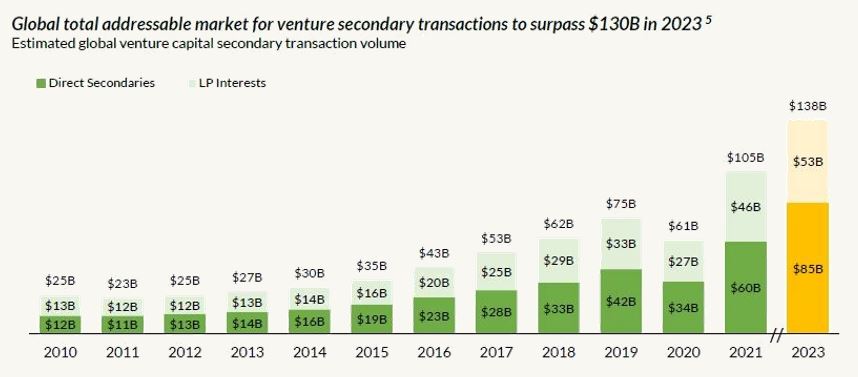
- Direct Secondaries: These involve purchasing shares directly from existing shareholders, such as employees or early investors, in a private company.
- Fund Secondaries: These involve buying limited partnership interests in venture capital funds from existing LPs, providing liquidity to the original investors.
Benefits of Secondary Investments
Secondary investments offer several advantages:
- Reduced Risk: Investors gain exposure to companies or funds with established performance metrics and reduced early-stage risks.
- Faster Returns: Since secondary investments often involve mature companies, the time to liquidity events like IPOs or acquisitions is shorter.
- Access to High-Growth Companies: Investors can enter high-growth startups at a later stage, often with clearer growth trajectories.
Challenges of Secondary Investments
Despite their benefits, secondary investments come with challenges:
- Pricing Complexity: Valuing private company shares or fund interests can be complex due to limited market data.
- Limited Availability: High-quality secondary opportunities are often scarce and competitive.
- Regulatory Hurdles: Secondary transactions may face legal and regulatory complexities, depending on the jurisdiction and structure of the deal.
What is the difference between primary and secondary investment in venture capital?

Definition of Primary and Secondary Investments in Venture Capital
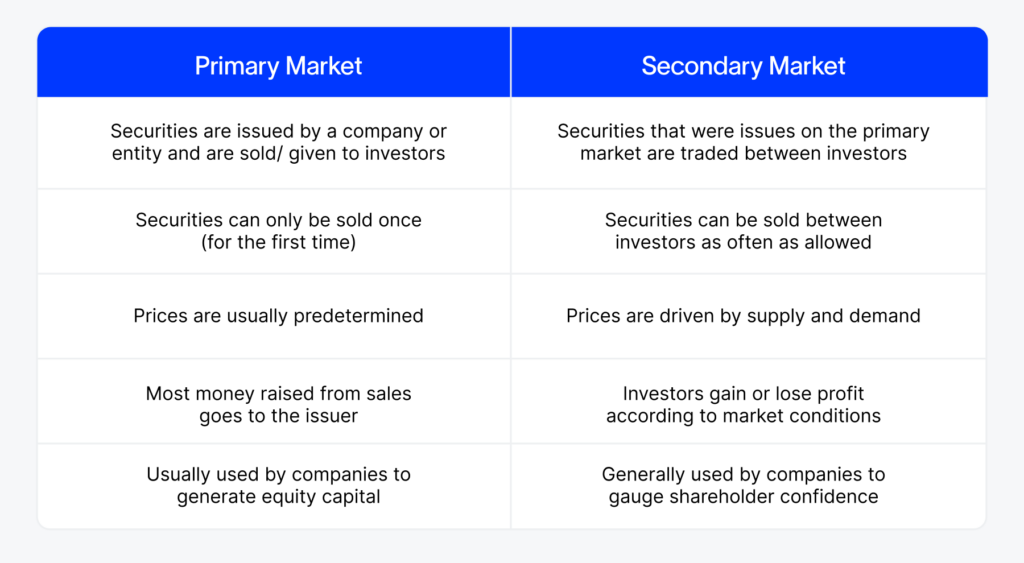
Primary investments in venture capital refer to the direct purchase of shares or equity in a startup or company during its early stages. These investments are made directly into the company, providing it with capital for growth and operations. On the other hand, secondary investments involve purchasing existing shares from early investors, employees, or other stakeholders, rather than directly investing in the company. This allows investors to buy into a company that may already have a proven track record or be closer to an exit event.
- Primary investments fund the company directly.
- Secondary investments involve buying existing shares.
- Primary investments are typically riskier but offer higher potential returns.
Risk and Return Profiles
Primary investments are generally considered higher risk because they involve funding companies in their early stages, where the likelihood of failure is greater. However, they also offer the potential for higher returns if the company succeeds. In contrast, secondary investments are often seen as lower risk because they involve companies that have already demonstrated some level of success or stability. The returns may be more modest but are often more predictable.
- Primary investments carry higher risk and higher potential returns.
- Secondary investments are lower risk with more predictable returns.
- Secondary investments are often made in more mature companies.
Liquidity Considerations
Primary investments are typically illiquid, meaning the capital is tied up for several years until the company reaches an exit event, such as an IPO or acquisition. Secondary investments, however, can offer more liquidity, as they often involve buying shares from existing stakeholders who are looking to exit their positions. This can provide investors with quicker access to returns, depending on the market conditions.
- Primary investments are illiquid and require long-term commitment.
- Secondary investments can offer quicker liquidity.
- Secondary markets provide opportunities for early exits.
Valuation Differences
In primary investments, valuations are often based on the company's potential and future growth prospects, which can be speculative. For secondary investments, valuations are typically more grounded in the company's current performance and market position, as there is more historical data available. This can make secondary investments more attractive to risk-averse investors.
- Primary investments rely on speculative valuations.
- Secondary investments are based on historical performance.
- Secondary valuations are often more accurate and reliable.
Investor Objectives and Strategies
Primary investments are often pursued by investors looking to support innovation and take on higher risk for the chance of outsized returns. These investors are typically venture capital firms or angel investors. Secondary investments, on the other hand, are more attractive to investors seeking stability and lower risk, such as institutional investors or family offices. The strategies for each type of investment differ significantly based on the investor's goals and risk tolerance.
- Primary investments attract risk-tolerant investors.
- Secondary investments appeal to risk-averse investors.
- Different investor types align with different investment strategies.
How do secondary markets benefit investors?
Enhanced Liquidity for Investors
Secondary markets provide investors with the ability to quickly buy or sell securities, ensuring that their investments are not locked in for extended periods. This liquidity is crucial for several reasons:
- Flexibility: Investors can respond to market changes or personal financial needs by selling assets without waiting for maturity.
- Price Discovery: Continuous trading helps in determining the fair market value of securities based on supply and demand.
- Reduced Risk: The ability to exit investments reduces the risk of holding illiquid assets.
Diversification Opportunities
Secondary markets allow investors to diversify their portfolios by providing access to a wide range of securities. This diversification helps in:
- Risk Management: Spreading investments across different assets reduces the impact of a poor-performing investment.
- Access to Various Sectors: Investors can invest in different industries, geographies, and asset classes.
- Enhanced Returns: Diversification can lead to more stable and potentially higher returns over time.
Price Transparency
Secondary markets offer transparent pricing, which is beneficial for investors in several ways:
- Fair Valuation: Investors can see real-time prices, ensuring they pay or receive fair value for securities.
- Informed Decisions: Transparent pricing helps investors make better-informed decisions based on current market conditions.
- Market Efficiency: Price transparency contributes to the overall efficiency of the market, reducing the chances of manipulation.
Access to a Broader Range of Securities
Secondary markets provide investors with access to a wide array of securities that may not be available in primary markets. This includes:
- Stocks and Bonds: Investors can trade shares of companies and government or corporate bonds.
- Derivatives: Options, futures, and other derivatives are available for trading, offering hedging and speculative opportunities.
- ETFs and Mutual Funds: These funds provide diversified exposure to various assets, often traded on secondary markets.
Lower Transaction Costs
Secondary markets often have lower transaction costs compared to primary markets, which benefits investors by:
- Reducing Overheads: Lower fees mean more of the investment returns go to the investor rather than covering costs.
- Encouraging Trading: Lower costs make it more feasible for investors to buy and sell securities frequently.
- Improving Net Returns: With reduced costs, the net returns on investments can be significantly higher.
What is the objective of secondary investment?

What is the Purpose of Secondary Investment?
The primary objective of secondary investment is to provide investors with opportunities to acquire stakes in existing assets or funds, rather than investing directly in new ventures. This approach allows investors to:
- Diversify portfolios by gaining exposure to established assets.
- Mitigate risks associated with early-stage investments.
- Access liquidity in otherwise illiquid markets.
How Does Secondary Investment Work?
Secondary investments involve the purchase of existing stakes in private equity funds, real estate, or other assets. The process typically includes:
- Identifying opportunities through specialized platforms or brokers.
- Negotiating terms with the seller to ensure favorable pricing.
- Transferring ownership through legal and financial processes.
What Are the Benefits of Secondary Investment?
Secondary investments offer several advantages, such as:
- Reduced risk due to the maturity of the underlying assets.
- Shorter investment horizons compared to primary investments.
- Potential for higher returns through discounted purchases.
What Are the Risks of Secondary Investment?
While secondary investments can be lucrative, they also come with certain risks, including:
- Limited transparency regarding the asset's performance history.
- Valuation challenges due to illiquid markets.
- Potential for overpaying if market conditions are unfavorable.
Who Can Benefit from Secondary Investment?
Secondary investments are particularly suitable for:
- Institutional investors seeking diversified portfolios.
- High-net-worth individuals looking for alternative investment opportunities.
- Fund managers aiming to optimize their asset allocation strategies.
Frequently Asked Questions by our Community
What are secondary investments in venture capital?
Secondary investments in venture capital refer to the purchase of existing stakes in private companies or venture capital funds from current investors. Unlike primary investments, where capital is directly invested into a company, secondary transactions involve buying shares or limited partnership (LP) interests from early investors, founders, or employees. These transactions provide liquidity to sellers while allowing buyers to gain exposure to established companies or funds without waiting for an initial public offering (IPO) or acquisition.
What are the benefits of secondary investments for buyers?
Secondary investments offer several advantages for buyers. First, they provide access to mature companies with proven business models, reducing the risk associated with early-stage investments. Second, buyers can often acquire these stakes at a discounted valuation, offering potential for higher returns. Additionally, secondary investments allow buyers to diversify their portfolios by gaining exposure to companies or funds that may have been previously inaccessible. Finally, these transactions can offer faster liquidity compared to traditional venture capital investments, as the holding period is typically shorter.
What are the benefits of secondary investments for sellers?
For sellers, secondary investments provide a valuable opportunity to monetize their holdings before an exit event like an IPO or acquisition. This is particularly beneficial for early investors, founders, or employees who may need liquidity for personal or business reasons. Additionally, selling secondary stakes can help sellers reduce risk by locking in gains or reallocating capital to other opportunities. The secondary market also offers a flexible exit strategy, allowing sellers to negotiate terms that align with their financial goals.
How do secondary investments impact the venture capital ecosystem?
Secondary investments play a crucial role in the venture capital ecosystem by increasing liquidity and fostering a more dynamic market. They enable early investors and employees to realize value from their equity, which can encourage further innovation and entrepreneurship. For venture capital funds, secondary transactions can help manage portfolio risk and provide returns to limited partners. Overall, the secondary market contributes to a healthier and more efficient venture capital landscape, benefiting all participants.
Leave a Reply
Our Recommended Articles